Monday, August 5, 2013

Waa Whale Shark Sanctuary (Diani) - What's to come?

Diani Beach has a huge
potential to become one of the
best Whale Shark tourist
destination in the world.
It is one of the few places
in the world, where one can set
out in the morning to swim with
Whale Shark the biggest fish in
the ocean and then have a 30
minutes drive to track the
biggest land animal the
elephant in the afternoon. This is the new subject of talk and focus in Diani- The Waa Whale Shark Sanctuary. This is
the brainchild of Volker Bassen,
founder of the East African Whale
Shark Trust (EAWST). Established in
2005 the EAWST was formed after
recognizing the need to protect
whale sharks off the Kenyan
coast.
The Waa Whale Shark
Sanctuary is located between
Mombasa and Diani and was chosen
for it’s unique location. It is sectioned off
by a thick net that measures 2,000
meters by 600 meters. The
sanctuary is located in a natural
bay where many whale sharks have
been spotted throughout the
years. The sanctuary is unique in
many ways. It is the world’s largest
whale shark enclosure, 100 times
the size of the world’s largest
Whale Shark Aquarium in Georgia/
USA that currently holds 4 whale
sharks. The sanctuary will also
serve as the first rescue and
rehabilitation center for injured
marine animals in Africa.

Bassen says that whale sharks
were increasingly endangered in East
African waters, where their liver oil
is used to seal fishing boats against
rot. In February 2008, a reported 42 whale sharks were killed off Pate Island in just that month.
The animals are the world's largest
fish, growing up to 30ft and
weighing more than 20 tonnes.
Although they are sharks, they are
entirely docile and feed only on
plankton that they harvest with their
wide mouths.
Volker Bassen, a dive instructor who
runs a Whale Shark Trust says next month, Kenya could become
home to the world’s largest whale
shark enclosure if the East African
Whale Shark Trust (EAWST)
succeeds in opening the Waa
Whale Shark Sanctuary .
The plans for the Sanctuary began
three years ago and now depend
on the environmental impact
assessment, conducted by the
National Environment
Management Authority.
Visitors will pay around $100 per
person to enter the park where
they will have a three hour marine
awareness lecture, followed by one
hour swimming with whale sharks. 
The enclosure will hold two whale
sharks at a time. Then, when
whale sharks in the wild are
migrating closer to the coast–
which happens twice a year,
typically between September and
October and again in February or
March–the whale sharks will be
released and replaced with two
new ones. This is part of their
effort to ensure that the animals
don’t spend their whole lives in
captivity. “If you ever have a chance to swim
with whale sharks, you will never
forget the magical experience,” Basser
said. “You will become an
ambassador for the protection of
these majestic animals for the rest
of your life.”

Hopefully, if all goes well, by November, the sanctuary will be up and running and open to tourists.Now isn't that something worth the wait?

YouTube Video On Waa Whale Shark Sanctuary

YouTube Video Part 2

Sunday, August 4, 2013

Kenya Destinations

Kenya's Top 7 Destinations http://msafirikenya.blogspot.com/2013/08/kenya-top-7-destinations.html

Kenya's Top 7 Destinations

Kenya is one of the most exciting places to visit in Africa. If I would described Kenya as a woman, she'd be absolutely beautiful,attractive, barely unexplored, with lots of wealth - natural wealth. Among the bounties of its natural resources we find our 'paradises' that are exciting destinations to be at.

         1. Masai Mara
The Mara is the home to the famous wildebeest migration.
People also come to the Mara to see the amazing variety of animals roaming
free in the wild. The Big 5 -leopard,
lion, rhino, elephant and buffalo
are all here, among a whole host of
incredible creatures including
giraffe, zebra, antelopes of all shapes
and sizes, aardvark, hyena, ostrich,
hyrax,wild dog, warthog and so many
more. The Maasai Mara is also
famous for the beautiful nomadic
tribes people. Here you will see the
Masai people in their traditional
bright blankets and
multicoloured beaded jewellery.  You
can see inside their traditional
homes and learn what it’s like to
live in harmony with nature as they live within the park and take part in its conservation and wildlife protection.
Between July and October, don’t
miss one of the greatest wildlife
spectacles in the world, when over a
million wildebeest, migrate into the
Maasai Mara from Tanzania as
they leap and swim across the Mara
river desperately trying to avoid the
snapping jaws of crocodiles who lay waiting.

              2. The Coast
The Kenya Coast is a perfect place to
relax in style; with palm fringed
beaches and the warm Indian ocean
lapping against the shore. This is an
exotic, exhilarating location and an exciting place
to be, perfect for diving, snorkeling,
big game fishing and a whole host of
water sports, or if you need to
unwind this tropical paradise is just
for a place to relax and sunbathe. Further, The Watamu & Diani beaches are the second and third best beaches in Africa and certainly absolutely wonderful to be at.
The coral reefs and marine parks are home to colourful fish gardens and dolphins,
even whales are sometimes seen. Also, the Kenyan coast has a vibrant and rich history from way back in the BCs that makes the Swahili culture and architecture
of the region an interesting place to visit.

            3. Samburu
Samburu, Buffalo Springs and Shaba
National Reserves are found in the
north tourism circuit of Kenya. This is a hot, arid
region with acacia woodland
reserves. Here you can see different
varieties of rare and endangered
animals not seen in other parks,
such as the long necked gerenuk (an antelope species which stands on two legs
to eat) reticulated giraffe, Grevy’s
zebra, and Beisa Oryx. There are also
many elephant, cheetah and
leopard. Birdlife is plentiful with
large flocks of guinea fowl seen and the pygmy falcon and sandgrouse
frequently seen. Traditional
Samburu homesteads are interesting
to visit with these tall, regal people
dressed in colourful attire.

           4. Lake Naivasha
Only an hours drive from Nairobi,
Naivasha conjures up
images of the 1940’s Happy Valley
set ("White Mischief") where the
colonial upper classes became
famous for their decadent lifestyle.
The yellow fever trees, line the
shoreline of the lake, and this
attractive part of Kenya is a good
place to be close to nature. There
are various outings and things to do,
including a visit to Crescent Island
where you can walk in safety among
wild but non dangerous animals,
climb Mount Longonot (2886m), visit the geothermal Project In Hells Gate National Park or have tea at
Elsamere which was the home of Elsa
the lion. Boat rides on the lake will
let you take in the fresh air and
semi submerged hippos and soaring
fish eagles. The range of
accommodation in and around
Naivasha ranges from swanky 5 star hotels to self catering cottages or
even a private ranch with it’s own
airstrip- sounds pretty interesting.

             5. Lamu
Lamu and it’s surrounding villages
and islands, have an appeal that
many find irresistible! This
picturesque Swahili town with it’s
quaint narrow streets and absence
of cars, epitomizes the slow, gentle
way of life in this part of the world.
It’s relaxed rhythm and charm,
makes other quiet places on the
east coast seem like sizzling
metropolises! After flying in, the
usual way to arrive is to sail across
to Lamu by dhow (a locally made
sailing boat). There are various
places to stay from lovely Swahili
houses with rooftop
patios
overlooking the sea, to hotels with
pools and all mod cons. The Lamu
Archipelago includes some very
beautiful uninhabited islands and
exclusive very upmarket destinations
visited by rockstars and royalty.

             6. The Tsavo
Tsavo is the largest Gamepark in
Kenya and it’s close proximity to the coast make it a popular safari
destination. It’s diverse landscapes
range from mountains, plains, lakes,
wooded grasslands, scrubland with
enormous baobab trees to river
forest. The vast openness, make it
easy to imagine that this unspoiled
wilderness was probably how all of
East Africa once looked. You’ll see
many elephant, the big 5 and a
whole host of other animals and
birds. Mzima Springs is an oasis in
Tsavo West, and has nature walks,
an underwater viewing chamber,
hippo pools and rapids making this
an interesting place to visit. Black
lava outcrops at Shetani are also
interesting as are the caves and
Chaimu crater nearby.

Wednesday, July 24, 2013

The Nairobi National Park : The World's Only Wildlife Capital

It's a chilly Tuesday afternoon standing at the fourth floor balcony of the Ole Sereni Hotel's new Eagles fine dining Restaurant that overlooks a water hole. The sun gleams through the cloudy skies striking me softly with its warm rays. Before me lies a vast savannah grassland with scattered acacia trees and not-so-green grass- The Nairobi National Park . In the scope of view, we could barely see any wildlife visible to the naked eye say for the chirping covey of small birds flying above us. Through set binoculars, we could see a few gazelles grazing on some tufts of grass far away. It's all a sight for sore eyes. 

The park is the only wildlife park situated t a city being only 7km from the capital's city center. The park lies on 117 square kilometers of open grass plains with scattered acacia
bush - the predominant vegetation. The western side has a highland dry forest and a
permanent river with a riverine
forest. To the south are the Athi-
Kapiti Plains and Kitengela migration corridor which are important wildlife dispersal areas for wildebeest and zebra during the rain season.

The park accommodates a wide variety of wildlife and bird life.  Four of the big five (lion, Buffalo, leopard & Rhino) are found here among others- cheetah, hyena, Giraffe, zebra, wildebeest, elands and diverse birdlife with over 400 species recorded. 20 of these bird species are said to be European migrant species.  Other attractions include the Ivory burning site Monument, Nairobi Safari Walk, the Orphanage and the walking trails at hippo
pools.

The park has 7 gates, 2 of which are KWS service gates.
Main gate: KWS headquarters
Langata road
Cheetah Gate
Langata Gate
Maasai Gate
Mbagathi Gate (service gate)
Banda Gate (service gate)
Entrance to the park is by a safari card, which can be acquired and loaded at the gate.

Activities
Safari walk
Game drives
Bird watching
Picnics
Corporate events and team events,etc

There is no in-park accommodation although there are numerous hotels around the park and within the city. However, one can have bush dinner within the park. How cool is that? I would think of it as being one with nature. One word -exhilarating. It's definitely one worth a try.

Tuesday, July 23, 2013

Kenya : Cradle of Mankind http://msafirikenya.blogspot.com/2013/07/kenya-cradle-of-mankind.html

Monday, July 22, 2013

Kenya : Cradle of Mankind

I am particularly very proud to be Kenyan today ; I think every Kenyan should be. Have you noticed that in many international movies and television series you will find a mention of Kenya come up? It gets better when it's for good reasons unlike many other African countries; mostly it's about safaris. It's a fantastic feeling knowing we are among the best when it comes to
wildlife
and safaris.
Irregardless, I believe I have another reason to be proud of Kenya here. Do you believe in the theories of evolution?  Well, if you do, you have to know that
Kenya is said to be the
cradle of mankind. Nonetheless, Ethiopia and South Africa claim the same 'title'.
In respect to that, The National Museum of Kenya has a list of factual support to the 'claim' as the cradle of mankind and it is as follows ;

Kenya has the largest number of
fossil human remains appr. 1000
individuals than any other country
in Africa.

Kenya has the oldest human remains
going back to 7 million year old from
Turgen Hills, Baringo (oldest in
Ethiopia = 4.5 million years ;
S.Africa ca 3 million years, Tanzania
= 2 million years.

Kenya has some of the most
complete skeletons e.g Turkana Boy
(1.6 Million years), which provided a
great wealth of information
regarding early human physiology
than anywhere in the world.

Kenya is endowed with many
prehistory sites scattered all along
the Rift Valley (north to south) and
western Kenya.

Kenya has many earliest ape sites
particularly in western Kenya. These apes are ancestors for earliest
humans. Ethiopia has just a handful
of these earliest sites thus making
Kenya the probable place where
transition from ape-like to human-
like beings occurred.

Kenya has the longest and most
complete record of human evolution
(and possibly the link between
humans and apes).

There is a huge collection in regards
to prehistory finds. Kenya actually
has the largest collection of human
related fossils anywhere in the
world. This collection is well
documented and can be found in
one central place- National Museum of Kenya Headquarters

Not only are all species of hominids
represented but also some other
faunal and plant species that relate
to the evolutionary theory (e.g.
elephants, giraffes, crocodiles and
even the dinosaurs).

In addition to the fossil record,
there is a long record of
technological evolution (with tools as
old as 2.3 million years).
There is a wide environmental
representation (open and closed
sites) in regards to evidence of
fossils and tools. Each region in
Kenya has a story to tell in regards
to the story of human origin. Varied
environments that may have been
instrumental in the evolution of both
humans and other species.

There is a wide genetic
representation among some of its
people (Turkana) pointing to the fact
that humans have been here for a
very long time.

There is a connection with the Far
East through the Red Sea where
humans are believed to have
dispersed from to other regions of
the world.
There is evidence of other factors
that relate to the evolution of
humans (e.g. humanity made fire as
far back as 1.8 Million yrs, footprints at
1.55 million yrs).

The study of human evolution began
in the early 20th century and
continues to present.
Kenya has about 20 Miocene (23.03
million years ago -ma to 5.3 Ma)
sites while Ethiopia has only two at
the moment.

I think the evidence is pretty credible. The Rift Valley especially has most sites and in consideration to the area's local climate, I second that evidence.
Some of the prehistoric sites that have been sources of fossil evidence are ;

Enkapune Ya Muto
Enkorika
Hyrax Hill
Ileret
Kapthurin
Koobi Fora
Ngenyn
Olorgesailie

Numerous fossils and tools collected from these sites are well preserved at the prestigious National Museums of Kenya which are distributed all over Kenya. Headquarters are located within the busy capital -Nairobi.

Aside from the prehistoric sites, Kenya boasts a rich archaeological history that has caught interest of many archaeology tourist especially with a particular interest to study that history. Some of the sites are:

Jumba la Mtwana
Kiongwe
Lamu
Mambrui
Manda Island
Namoratunga
Pate Island
Ruins of Gedi
Takwa

Each of these sites plus many more have a uniquely tasteful history that all together make the country that is Kenya is today. These sites are priceless riches that we should continue guarding for our benefit and generations to come.
Facts source : National Museum of Kenya
© Msafiri Kenya Blog

Saturday, July 20, 2013

Wasini Island : The Kenyan Dolphin Waters

Ever had a place in your life or a destination that you would consider 'heavenly' or
simply put 'paradise on earth'? I guess I finally found one that does the magic for me ; Wasini Island.
A beautiful coral island located in the south east Indian Ocean
coast of Kenya near Shimoni and 10 km away from Kisite- Mpunguti Marine park, this island has a lot to offer a tourist.
A tour in this area would encompass a great variety of wild adventures in a wild coral
island.
With the scarce local population,wild mangrove forests and practice of eco- tourism, the island is almost intact and perfect for adventure.
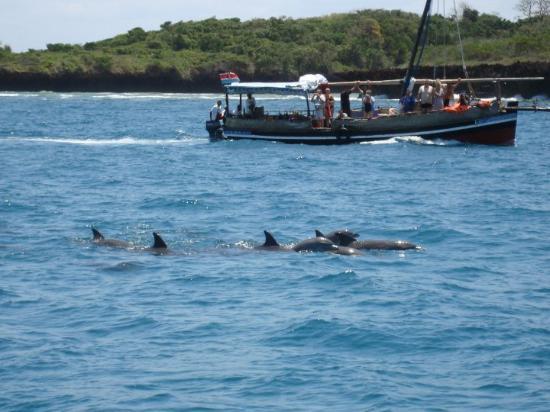
Wasini Island is well famed as an excellent place for spotting for dolphins. For the adventure- seeking msafiri, you wouldn't want to miss a chance at snorkeling while having a swim with the dolphins- probably the most intelligent sea creatures. I'd bet this experience is one worth the history books.
If you'd ever want an experience fishing here, there are a lot of sports fishing
vessels that go straight through the
Pemba Channel, and it is a fishing
ground that’s well-known in Kenya,
World IGFA, and All Africa fishing
records with bountiful fish varieties.

Take an adventure walk of its own kind in the coral gardens on
the Western end of the island,
women groups have set up a nature
walk in it. Here you get to view plenty of colourful fishes in the sapphire oceanic waters. The proceeds go toward
Wasini benefactors, including Wasini
students. Here tours are usually packaged prior to the visit to the island hence making
it easier to include all activities in your package. This tour won't take much of your time
so you could make a detour visit in your planned tour. What's more? Clean Sun- kissed empty beaches around it,
definitely an escape from crowded beaches, would
certainly do for a peaceful afternoon.
Finally,
what's a tour to Wasini Island without a visit to the exquisite Charlie Claw's Restaurant?
Get served with finger-licking seafood delicacies at a
fair price here to complete the tour of this paradise.
This is the one island that would beg the question,
'what better place could you ever visit? ' Given a chance,
I would sacrifice all savings just to seize this exhilarating, once in a lifetime experience- seriously , it's worth the praise.